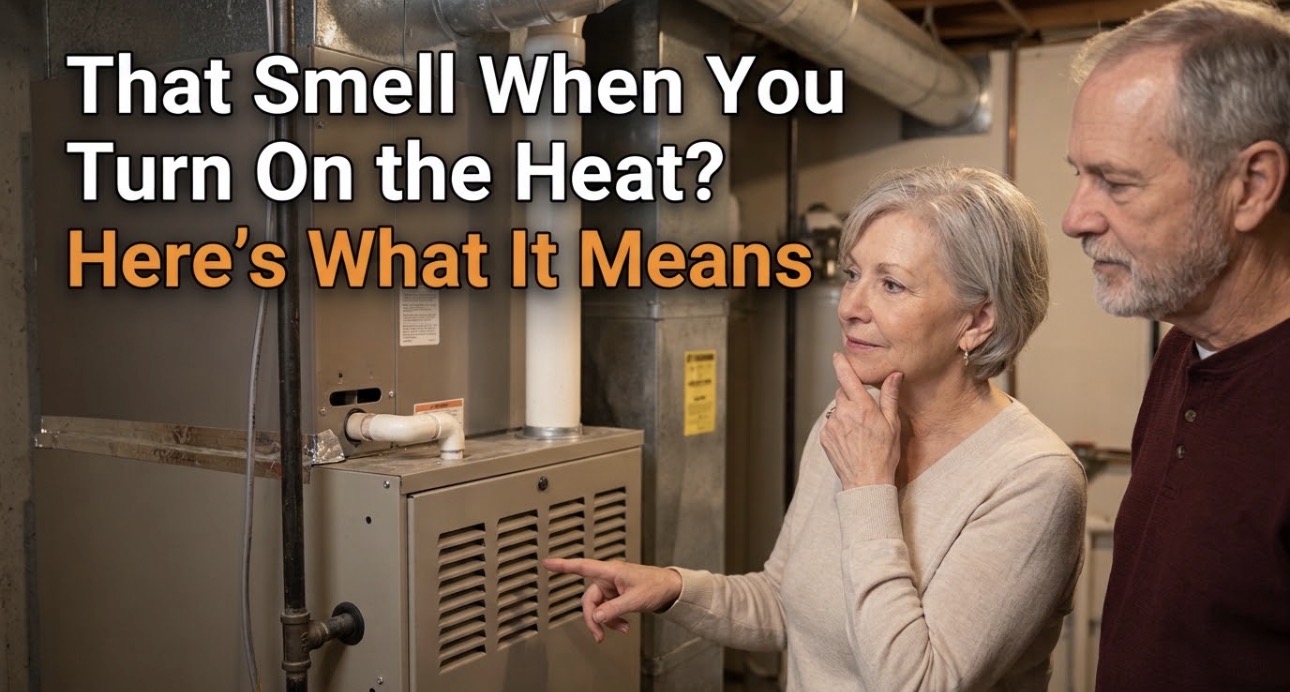
When Michigan homeowners turn on their furnaces for the first time after summer, an unfamiliar smell can be concerning. Some odors are harmless and disappear quickly, while others may signal a problem that needs professional attention.
The key is knowing which furnace smells are normal, which ones require an inspection, and when to act immediately.
The Dusty, Burning Smell at Startup
A dusty, slightly burnt smell is common when you first turn on the furnace in the fall. During the summer, dust accumulates on internal components. When the system heats up, that dust burns off, creating a temporary odor.
The smell usually fades within about an hour.
What to do: If the odor is mild and disappears quickly, it is generally normal. If it persists, becomes stronger, or is accompanied by smoke, turn off the furnace and arrange an inspection.
Scheduling [furnace maintenance] before the heating season can help reduce dust buildup and identify potential problems early.
A Musty Smell Coming From the Vents
A musty or stale odor coming from your air vents may indicate dust, moisture, or debris in the ductwork. Persistent moisture can also create conditions that encourage mold or mildew growth.
What to do: Check your air filter and replace it if necessary. If the smell continues, consider a professional ductwork inspection to identify the source.
A musty smell does not automatically mean mold is present, but it should not be ignored if it persists.
A Burning Plastic or Electrical Smell
A burning plastic or electrical smell may indicate overheating wiring, a failing blower motor, or another damaged component. Unlike the usual dusty startup odor, this smell should not be treated as normal.
What to do: Turn off the furnace and arrange for professional [furnace repair]. Do not restart the system until it has been inspected. If you see smoke or signs of an electrical fire, leave the affected area and seek emergency assistance.
A Rotten Egg or Sulfur Smell
A rotten egg smell near your furnace or gas lines may indicate a natural gas leak. Utility companies add an odorant to natural gas to make leaks easier to detect.
What to do: Leave the building immediately without operating electrical switches or appliances. Call your gas utility’s emergency line or local emergency services from a safe location outside. Do not return until professionals confirm the building is safe.
Treat any suspected gas leak as an emergency, even if the odor seems faint.
An Oil or Fuel Smell
A strong or persistent fuel smell may indicate a leaking connection, a burner problem, or incomplete combustion in an oil-fired furnace.
What to do: Turn off the system if you notice a strong or persistent odor, and contact a qualified heating technician. If there is visible leakage or an immediate fire hazard, leave the area and seek emergency assistance.
Regular maintenance can help identify fuel-related problems before they become more serious.
Smoke or a Burning Metal Smell
Smoke or a persistent burning metal odor may indicate overheating, restricted airflow, a failing motor, or a blocked exhaust flue. A damaged heat exchanger is another concern because it can allow combustion gases to enter areas where they do not belong.
Remember that carbon monoxide is odorless, so smell alone cannot tell you whether it is present.
What to do: Turn off the furnace and arrange for a professional inspection before using it again. If your carbon monoxide alarm sounds or anyone experiences symptoms such as dizziness, headache, or nausea, leave immediately and call emergency services from outside.
When to Call for Furnace Repair
Not every furnace smell requires an emergency call, but knowing the warning signs matters.
- Usually normal: A mild dusty smell that fades within about an hour without other warning signs.
- Schedule an inspection: A persistent musty odor or recurring unusual smells. Turn off the furnace if you suspect an electrical or overheating problem.
- Seek emergency help: A rotten egg or sulfur smell, visible smoke or signs of fire, or a carbon monoxide alarm. Leave the building if there is an immediate danger.
If you cannot identify the source of an unusual odor, it is safer to have the system checked than to assume everything is fine.
How to Prevent Furnace Smells Before Winter
Regular [furnace maintenance] can help reduce startup odors and identify potential issues before the heating season begins. A professional tune-up typically includes inspecting key components, checking electrical connections, examining the burner and heat exchanger, and cleaning parts of the system as needed.
Homeowners should also replace dirty air filters, keep the area around the furnace clear, and watch for changes in how the system operates.
In Michigan, early fall is a good time to schedule maintenance. If you have not had your furnace serviced yet, late October and early November can still be good opportunities to prepare for colder weather.
Keep Your Home Comfortable and Your Furnace Safe
A brief dusty smell when you first turn on the heat is usually harmless. Persistent musty odors, burning electrical smells, smoke, and possible fuel leaks deserve more attention.
Recognizing the difference can help you protect your home, avoid unnecessary repairs, and keep your heating system running safely throughout Michigan’s winter.
If something doesn’t smell right, don’t wait for the furnace to stop working. A timely inspection can help identify the problem before it becomes more serious.