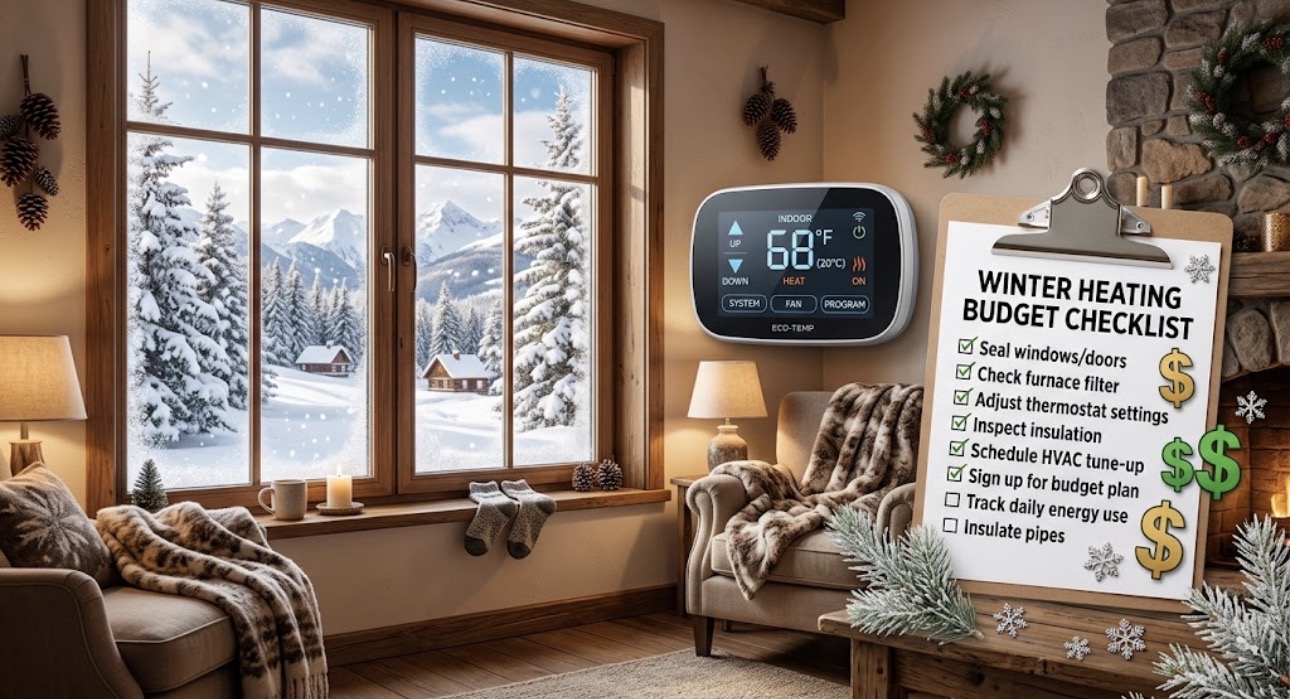
With freezing temperatures and long heating seasons, knowing what to expect before winter arrives can make it easier to plan your household budget and identify ways to reduce unnecessary heating costs.
You don’t need to know exactly what your heating bill will be months in advance. However, you can make a reasonable estimate by looking at your previous energy usage, your home’s characteristics, and the condition of your heating system.
Here’s how to estimate your heating bill and what you can do if the number is higher than you’d like.
Start With Last Winter’s Heating Bills
The simplest way to predict your upcoming heating costs is to look at what you paid last winter.
Check your natural gas or electricity bills from the previous heating season and compare the same months. If you have several years of records, even better. This gives you a baseline for how much energy your home typically uses during cold weather.
Keep in mind that one winter may be very different from another. A particularly cold January can result in significantly higher heating costs than a mild winter.
If your utility company provides monthly or annual usage information, look at the amount of energy consumed rather than only the dollar amount. Energy prices can change from one year to another, so comparing usage can give you a clearer picture of how efficiently your home is being heated.
Consider the Size and Age of Your Home
The size of your home has a direct impact on how much energy is required to maintain a comfortable indoor temperature.
A larger home generally requires more energy to heat than a smaller one. However, square footage isn’t the only factor.
Older homes may have less insulation, older windows, or more air leakage around doors and other openings. These factors can increase the amount of heat your furnace needs to provide.
The condition of your home’s insulation, windows, doors, and ductwork can all affect your overall heating costs.
Your Furnace Matters Too
Your heating system plays an important role in determining your winter heating bill.
An older furnace may still operate reliably, but it may not be as efficient as a newer system. Over time, components can also become dirty or worn, which can affect system performance.
A furnace that runs longer than necessary to reach the desired temperature may be using more energy than it should.
Before winter arrives, consider scheduling professional furnace maintenance. A technician can inspect the system, check important components, and identify potential issues that could affect performance during the heating season.
Check Your Thermostat Settings
Your thermostat settings can have a noticeable impact on heating costs.
The warmer you keep your home, the more energy your heating system generally needs to maintain that temperature. Lowering the thermostat slightly when you’re sleeping or away from home can help reduce energy use.
A programmable or smart thermostat can make this easier by automatically adjusting the temperature according to your schedule.
However, avoid making dramatic temperature changes that cause your system to work excessively to restore the desired temperature. A consistent, reasonable schedule is usually easier for both your household and your heating system.
Don’t Ignore Drafts and Air Leaks
If warm air is escaping from your home, your furnace has to work harder to maintain the temperature you want.
Check common areas where drafts can occur, including:
- Windows and exterior doors
- Door frames
- Attic access points
- Electrical outlets on exterior walls
- Areas around pipes and utility openings
Weatherstripping, caulking, and other relatively simple improvements can help reduce unwanted air leakage.
If your home feels noticeably colder near certain windows or doors, identifying and addressing those areas before winter can be worthwhile.
Check Your Air Filter
A dirty HVAC filter can restrict airflow and make your heating system work harder.
How frequently you should replace your filter depends on the type of filter, the system, and conditions in your home. Homes with pets, construction dust, or higher levels of indoor activity may require more frequent replacement.
Checking your filter regularly is a simple maintenance task that can support proper airflow and overall furnace performance.
Consider How Michigan Weather Affects Heating Costs
Michigan winters can vary significantly from year to year.
A winter with extended periods of below-freezing temperatures will typically require more heating than a relatively mild winter. Even if your home and furnace haven’t changed, your heating bill can still be different because of weather conditions.
That’s why it’s better to think in terms of a range rather than trying to predict one exact monthly bill.
For example, if your heating costs were consistently between $150 and $250 per month during similar winter conditions, that range may be more useful for budgeting than expecting the same exact amount every year.
What If Your Estimated Heating Bill Is Too High?
If your estimate is higher than you’re comfortable with, don’t wait until the middle of winter to investigate.
Start with the easiest steps:
- Review your previous energy usage.
- Check your furnace filter.
- Look for obvious drafts and air leaks.
- Review your thermostat schedule.
- Make sure vents and registers aren’t blocked.
- Schedule professional furnace maintenance.
- Ask an HVAC professional whether your system is operating efficiently.
Sometimes the solution is simple. In other cases, a professional inspection may reveal an issue that is causing the system to work harder than necessary.
When It May Be Time to Consider a New Furnace
High heating bills don’t automatically mean that you need a new furnace.
However, replacement may be worth considering if your furnace is older, requires frequent repairs, struggles to maintain a consistent temperature, or your heating costs have increased significantly without a clear explanation.
A professional HVAC technician can evaluate the system and help determine whether continued repairs or replacement makes more sense for your situation.
The goal isn’t simply to install newer equipment. It’s to have a heating system that is appropriately sized for the home and capable of providing reliable, efficient heat.
Plan Before the First Major Cold Snap
The best time to think about winter heating costs is before you actually need your furnace running around the clock.
Review last year’s heating bills, check your HVAC filter, look for obvious air leaks, and schedule a furnace inspection if your system hasn’t been serviced recently.
These steps won’t guarantee a specific heating bill, but they can give you a better understanding of what to expect and help reduce avoidable heating expenses.
For Michigan homeowners, preparing your heating system before winter can mean fewer surprises when the first cold-weather utility bill arrives.